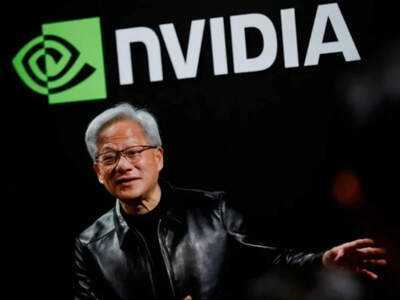
has resigned as president, chief executive officer (CEO) and a member of 's board of directors with immediate effect, the company announced on Thursday. The departure of the 63-year-old co-founder marks a major leadership change at the world's leading AI chipmaker, raising questions about the company's future direction and its wider implications for the artificial intelligence industry.
Nvidia's board has appointed , the company's executive vice-president and chief financial officer (CFO), as interim CEO. Kress will continue to hold her CFO responsibilities while serving as interim chief until a permanent successor is appointed.
The board has initiated a search for a permanent CEO and will consider both internal and external candidates. It has also appointed Harvey C. Jones as its first-ever chairman of the board.
Also read:
Huang, 63, who co-founded Nvidia in 1993, has been at the helm of the company for more than three decades. Over this period, he steered it from a graphics chipmaker into one of the biggest beneficiaries of the global artificial intelligence boom. His departure marks a major change for the company and the wider .
His exit comes amid a controversy involving Alice Huang, a Chinese businesswoman and former senior executive at Singapore-based data centre company Megaspeed, whom US intelligence agencies suspect of gathering information for Beijing. Huang admitted to having an extramarital relationship with her and apologised to his wife, children and Nvidia employees.
The revelations led Nvidia's board to launch an independent investigation into reports that Huang had been targeted by a foreign intelligence operation. The company, however, said its board had no reason to believe that US national security or Nvidia's confidential information had been compromised.
A separate report by , published on November 11, has brought another reported relationship involving Huang into the spotlight. The newspaper, citing five people familiar with the matter, reported that Huang had a relationship with Kimberly Powell, Nvidia's vice-president of healthcare, who reportedly worked directly under him. Two sources told the publication that video footage showed the two being affectionate at an event in March. Powell is also married.
Also read:
Powell joined Nvidia in 2008 and leads its global healthcare business, which works on technologies using accelerated computing, AI and visualisation across areas including medical imaging, life sciences and drug discovery.
A hands-on boss who kept a close watch on the business
Few technology executives have been as closely involved in their companies' day-to-day operations as Huang. His management style has long been a defining feature of Nvidia, with major decisions passing through him and even smaller matters often receiving his personal attention.
At the company's headquarters in Santa Clara, California, Huang works behind a large oval desk facing his senior executives. Other employees sit in stadium-style rows behind them, an unusual arrangement that offers a glimpse into how he runs the business.
According to Bloomberg, Huang has around 60 direct reports, considerably more than most technology CEOs. These executives regularly email him their "top five things", which he reads and responds to at all hours.
His involvement is not limited to product development or major business decisions. Huang is also known to personally review employee compensation, reflecting just how closely he follows the company's internal operations.
Huang has defended this hands-on approach, arguing that it helped Nvidia expand while remaining flexible enough to respond to changes in the technology industry.
"My management style is what made it possible for the company to grow," he told Bloomberg.
But the same approach that helped shape Nvidia's success has also raised concerns about how the company would operate without Huang making so many of its decisions.
Contact to : xlf550402@gmail.com
Copyright © boyuanhulian 2020 - 2023. All Right Reserved.