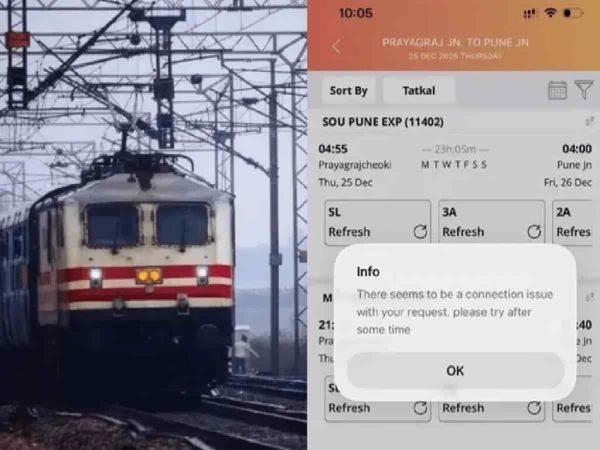
Responding to widespread speculation on social media and digital forums regarding an alleged technical breakdown of its digital railway booking infrastructure, the Indian Railway Catering and Tourism Corporation (IRCTC) formally clarified that its online ticketing and reservation systems remained fully operational throughout Tuesday morning. The state-owned railway subsidiary dismissed viral media reports asserting that the e-ticketing portal had suffered a catastrophic server outage, describing claims of a total system crash as unfounded rumors. Railway authorities emphasized that while the backend reservation framework remained functional, millions of passengers attempting to secure last-minute travel berths for the ongoing Diwali and upcoming Chhath Puja festive rush triggered an unprecedented surge in simultaneous user logins. This extraordinary spike in digital traffic placed transient computational friction on session authentications, leading to login latency and booking queue delays for a segment of users. Addressing passenger concerns, IRCTC affirmed that both its official desktop website and mobile application continue to process tickets, with engineering teams maintaining active surveillance over server loads.
Official Clarification: Unpacking the Concurrent Traffic Spike
The clarification follows a flood of grievances posted by travelers across microblogging platforms on Tuesday morning, with users alleging that the online booking portal had become unresponsive during peak morning hours. Independent service-outage tracking platforms recorded an influx of user-submitted complaints flagging persistent loading loops on the primary home page, authentication timeouts, and delayed payment confirmations.
In an official statement aimed at quelling public panic, the railway corporation clarified the technical nature of the incident:
Continuous System Uptime: IRCTC confirmed that the core reservation engines and ticket booking servers did not crash or experience a nationwide outage at any point during Tuesday morning.
Latency vs. System Downtime: The corporation clarified that user-perceived downtime was actually performance latency caused by rate-limiting queues. “It is to clarify that the online reservation portal remained up and operational during these periods; however, the performance in terms of availability to users was seemingly delayed due to the high concurrent logins on the portal,” the official response noted.
Session Bottlenecks: When hundreds of thousands of users attempt to enter login credentials at the exact same second, web application firewalls and security load balancers queue incoming requests to protect backend databases from distributed denial-of-service (DDoS) style traffic overloads. This protective mechanism caused some users to encounter temporary login timeouts rather than immediate dashboard access.
The Festive Rush Dynamic: Diwali and Chhath Puja Surge Strains Capacity
The sudden surge in digital ticketing attempts comes at a time when passenger movement across the Indian railway network reaches its annual high. The consecutive occurrence of Diwali and Chhath Mahaparva creates an intense demand for long-distance train travel, particularly across arterial rail corridors connecting northern and western metropolises to eastern states like Uttar Pradesh, Bihar, and Jharkhand.
Several seasonal factors contributed to Tuesday’s concentrated traffic influx:
The Tatkal Ticket Race: With scheduled regular train services operating at waitlisted capacity weeks in advance, the daily opening of Tatkal reservation windows—at 10:00 AM for air-conditioned coaches and 11:00 AM for non-AC sleeper classes—sees an enormous influx of simultaneous users. Every available berth on high-demand express trains is often booked within seconds, resulting in millions of rapid page refreshes.
Special Train Berth Openings: As Indian Railways announced and scheduled hundreds of festival special trains to clear transit rush, notification releases triggered spontaneous waves of traffic to the ticketing portal as travelers rushed to grab newly created quotas.
Multiple Concurrent Devices: Anxious travelers frequently attempt to access individual IRCTC user accounts simultaneously across smartphones, desktop browsers, and office laptops on shared Wi-Fi networks. These duplicate connection attempts magnify server requests exponentially, triggering automatic IP throttling designed to safeguard the integrity of the booking ledger.
Technical Modernization: How CRIS and IRCTC Manage Digital Load
The IRCTC e-ticketing platform, engineered and managed in close coordination with the Centre for Railway Information Systems (CRIS), represents one of the largest transaction-processing engines in the world. Handling over a million passenger reservations daily during normal periods, the infrastructure undergoes continuous capacity scaling to accommodate national demand.
Over recent years, Indian Railways has deployed substantial cloud and hardware enhancements to handle festive load variations:
Elastic Server Architecture: The ticketing portal utilizes dynamic cloud server scaling to handle capacity spikes during designated festival windows, expanding memory and processing pipelines to prevent server failures.
Anti-Bot and Fair Play Safeguards: During morning Tatkal windows, automated bots and unauthorized commercial booking scripts historically clogged server bandwidth. Modern algorithmic safeguards, captcha challenges, and multi-factor authentications (including Aadhaar-linked verifications) screen out bot-driven booking requests, ensuring legitimate individual passengers retain equitable access to railway berths.
Payment Gateway Redundancy: To prevent transaction drop-offs when high transaction volumes strain banking partners, the portal routes digital payments through multiple multi-bank aggregators, direct debit UPI bridges, and the IRCTC iMudra dedicated digital wallet to streamline checkout speeds.
Best Practices for Travelers: How to Avoid Booking Delays
While engineering teams work continuously to maintain operational stability during heavy festive surges, transport consultants recommend that travelers follow strategic booking habits to navigate peak-hour digital traffic smoothly:
Log In Early Before Peak Slots: For users planning to book Tatkal or Premium Tatkal tickets, entering the mobile application or website five to seven minutes ahead of the 10:00 AM or 11:00 AM window prevents last-minute gateway congestion.
Utilize Master Passenger Lists: Pre-saving passenger profile details—including names, ages, berth preferences, and government identity card numbers—in the account master list beforehand eliminates the need for manual typing during the critical booking countdown.
Avoid Rapid Browser Refreshes: Repeatedly hitting the refresh button when a page is loading delays request processing, as each refresh cancels the previous server request and pushes the user to the back of the queue.
Opt for Direct UPI or Wallet Payments: Utilizing integrated digital railway wallets or quick QR-based UPI payments generally processes faster than manual net-banking or debit card OTP verifications, reducing session expiry risks.
Contact to : xlf550402@gmail.com
Copyright © boyuanhulian 2020 - 2023. All Right Reserved.