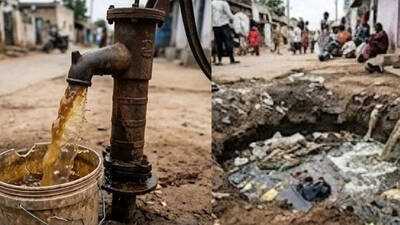
HYDERABAD: As Telangana grapples with El Nino and mounting water stress, groundwater quality has emerged as another concern, with several locations across the state recording concentrations of fluoride, nitrate, uranium, iron and manganese well above permissible limits, according to the Central Ground Water Board's (CGWB) Annual Ground Water Quality Report 2026.
Rangareddy district has emerged as a major nitrate hotspot, with groundwater samples from several locations recording concentrations four to five times the permissible limit of 45 mg per litre. High concentrations of fluoride and uranium were also recorded in several parts of the state, including Nalgonda, Nirmal, Mahabubnagar, Wanaparthy and Vikarabad, indicating that contamination extends beyond isolated hotspots.
Poor sewage, waste disposal
The findings raise concerns over the safety of borewell water, particularly in areas where households depend on groundwater for drinking and other domestic needs. The CGWB's previous report, published in 2025, had found that 290 of the 1,114 groundwater samples analysed in Telangana exceeded the permissible nitrate limit. Another 167 samples recorded fluoride concentrations above the prescribed limit of 1.5 mg per litre.
Experts point to inadequate sewage infrastructure and poor waste management as potential contributors to groundwater contamination . In several urban areas, including Hyderabad, sewage flows through open nalas meant to carry stormwater. Sewage overflows, particularly during rains, can contaminate surrounding areas and potentially seep into the ground, they said.
"In rural areas, human waste, indiscriminate garbage dumping and the disposal of festive waste contribute to nitrate pollution. Fluoride contamination, meanwhile, has long been a concern in Telangana because of the region's geological formations. As rainwater percolates through the ground, it can dissolve fluoride-bearing minerals in rocks and carry the element into groundwater," said M V S S Giridhar, professor at the Centre for Water Resources, JNTU Hyderabad.
Serious health risks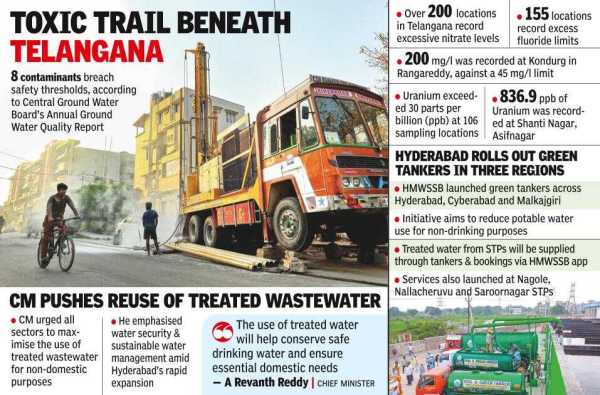
Health experts say excessive concentrations of nitrate, fluoride and uranium in drinking water can pose serious health risks, particularly to children and infants. Nitrate contamination is especially dangerous for infants as it can cause blue baby syndrome, a condition that reduces the blood's ability to carry oxygen and can become life-threatening if left untreated.
Long-term exposure to high fluoride levels can damage teeth and bones, causing dental fluorosis in children and skeletal fluorosis in adults. Prolonged consumption of uranium-contaminated water can also damage the kidneys, experts said.
"Nitrates, fluoride and uranium above safe limits in Telangana groundwater pose clear health risks. Nitrates raise long-term risks of certain cancers and birth defects, whereas fluoride leads to dental fluorosis in children and skeletal fluorosis (joint pain, bone damage) with prolonged exposure. Higher levels may also affect thyroid and cognition. Children, infants and pregnant women are most vulnerable," explained general physician Chaitanya Challa.
Experts have also cautioned residents against assuming that deeper borewells necessarily provide safer drinking water, particularly when drilling reaches depths of 1,500 to 3,000 feet.
"When groundwater is extracted from deeper aquifers, the concentration of total dissolved solids (TDS), including dissolved minerals and salts, will increase. While the desirable TDS level for drinking water is around 500 mg per litre, levels approaching or exceeding 1,000 mg per litre can affect water quality and potability. Deeper groundwater may contain higher concentrations of metals and minerals, raising concerns over its suitability for drinking," said B V Venkateshwar Rao, an expert in disaster management.
Contact to : xlf550402@gmail.com
Copyright © boyuanhulian 2020 - 2023. All Right Reserved.