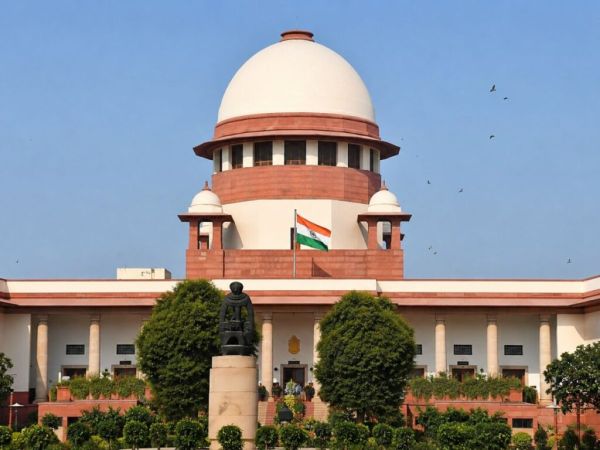
The Supreme Court has indicated that a person who chooses not to sing one or all stanzas of “Vande Mataram” on grounds of religion or conscience should not face criminal consequences. The observation came while the court was hearing a petition filed by Carnatic vocalist T.M. Krishna challenging the constitutional validity of the 2026 amendment to the Prevention of Insults to National Honour Act, 1971. A three-judge bench comprising Chief Justice of India Surya Kant and Justices Joymalya Bagchi and V. Mohana sought the Union government’s response to the petition and indicated that its scrutiny would focus on the penal consequences of the amended law.
Court Refers to 1986 Bijoe Emmanuel Judgment
During the hearing, the bench referred to the Supreme Court’s 1986 Bijoe Emmanuel judgment, which protected three schoolchildren who respectfully stood during the National Anthem but did not sing it because of their religious beliefs. The court indicated that the principle established in that case continues to hold the field, particularly when the issue concerns a person’s conscience or religious belief.
What Is T.M. Krishna Challenging?
Krishna has challenged the 2026 amendment as well as Ministry of Home Affairs directions concerning the singing of the complete six-stanza version of Vande Mataram at official functions. The amendment extends Section 3 of the 1971 Act to the National Song. It makes intentionally preventing the singing of Vande Mataram or disrupting an assembly engaged in singing it punishable with imprisonment of up to three years, a fine, or both.
Court Won’t Decide Two-Stanza vs Six-Stanza Question
The bench made it clear that it would not, at this stage, decide what constitutes the National Song or whether its official rendition should contain two or all six stanzas. It said questions concerning national symbols and their form fall within the domain of the elected government. The Supreme Court has asked the Centre to respond to Krishna’s petition within two weeks. The matter remains pending, with the court presently focusing on whether criminal penalties can apply to a person who respectfully declines to sing Vande Mataram for religious or conscientious reasons.
Shamshad Ali is a New Delhi–based journalist with over six years of experience spanning breaking news writing, on-the-ground reporting, and editing. When he isn’t chasing headlines, Shamshad is usually exploring new destinations, discovering hidden culinary gems, and striking up conversations with strangers. Many of whom turn out to be great sources, and even better friends. He can be reached at shamshadali.dar@gmail.com.
The post Vande Mataram Row: ‘Not Singing For Religious Reasons Isn’t A Crime,’ SC Observes, Seeks Govt’s Response appeared first on NewsX.
Contact to : xlf550402@gmail.com
Copyright © boyuanhulian 2020 - 2023. All Right Reserved.