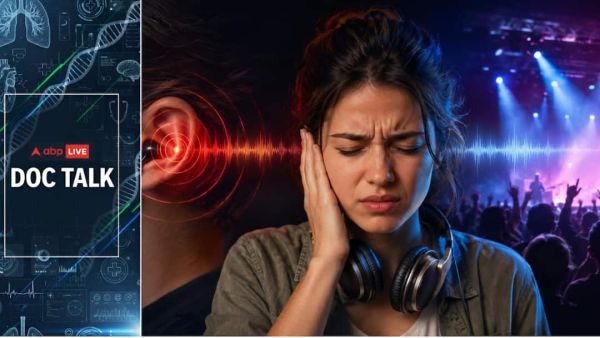
For today’s adults, listening to loud noises has become integral to their entertainment activities, ranging from concerts and nightlife to intensive workout classes, video games, and personal music devices. Although it seems that listening from time to time does nothing bad, frequent listening leads to hearing impairment over time without any problematic signs at its beginning. According to WHO, more than 1 billion young people aged 12-35 years are likely to have hearing problems due to unsafe entertainment.
The effect of loud sound on hearing.
How Can Young People Avoid Hearing Loss?
The inner ear contains a huge amount of hair cells specialized in transferring sound vibrations to the brain. These hair cells will die because of excessive noise exposure. The big disadvantage is that, unlike other cells of our organism, inner ear cells can’t regenerate.
Various activities cause powerful sound waves. At the same time, every workout requires music playing. This goes for video games as well since there is a need to don headphones for a considerable time. The earliest symptom of the problem comes in the form of buzzing or ringing in the ears. Though it may not last for long, it does not mean one should disregard this phenomenon.
As per one of the more widespread misconceptions, the term ‘safe Hz level’ serves as a reference point for hearing protection. Although Hertz (Hz) denotes frequency as in the case of decibels (dB/dBA), when viewed in the context of hearing protection, we must evaluate loudness as an important factor, and time. As per the WHO, the maximum sound level is 80 dB for a maximum duration of 40 hours.
At the sound level of 90 dB, the person can only bear sound for 4 hours, and at 100 dB for 20 minutes. Thus, louder sounds allow less time for exposure. NIOSH (National Institute for Occupational Safety and Health) states that 85 dBA over 8 hours is the point of noise injury for employees.
To keep hearing safe against noise, one should know how to deal with noise, that is, the dB levels, time of exposure, and frequency of exposure. Therefore, when at clubs or concerts, people should make sure to sit far from speakers, take a break for at least five minutes in a quiet zone, and buy good earplugs.
In the gym, it is better not to sit too close to the speakers, and also the volume of the headphones should be kept safe. According to the WHO, the noise produced by personal devices must not exceed 60 dB, and while listening to music, the loudness of the sound should not exceed 80 dB.
When Should One See An ENT Specialist?
If a person suffers from tinnitus that recurs, has muffled hearing, is having difficulty following any conversations, or is experiencing sensitivity to sounds, then the person should visit an ENT doctor. The issue of noise-induced hearing loss can be very difficult to treat due to the fact that the person has already suffered damage. After the check-up, the doctor can recommend audiological rehabilitation and follow-up of hearing situations.
Young people do not need to stop going to concerts and playing games as long as they turn down the sound, do not expose their ears to loud sounds for too long, take breaks from loud sounds, and wear ear protection.
Contact to : xlf550402@gmail.com
Copyright © boyuanhulian 2020 - 2023. All Right Reserved.