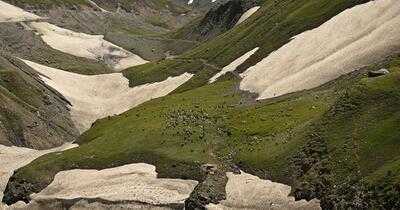
Glaciers are often seen as frozen reservoirs of clean and fresh water, but new research shows they are also active chemical systems and climate warming may be altering not just how much water they release, but also its quality.
A new study on Rulung Glacier in Ladakh region found that rising temperatures and faster glacier melt are intensifying interactions between meltwater and the rocks beneath the ice, altering the chemistry of water flowing into the Indus river basin. Researchers say these changes could affect river ecosystems, agriculture, and drinking water supplies downstream.
The Himalayas, often called the “Water Tower of Asia”, store vast freshwater reserves in glaciers and snowfields that sustain major river systems supporting over a billion people. Glaciers act as natural water reservoirs, releasing meltwater during dry seasons and regulating water availability for agriculture, hydropower, and daily use. In cold-arid regions like Ladakh, where rainfall is scarce, communities depend heavily on glacier-fed streams, making any changes in the hydrochemistry of meltwater especially critical.
Water chemistry
Whether it is rainwater, river water or groundwater, every type of water carries a distinct chemical signature acquired from its interaction with rocks, soils, gases, biological activity, and sometimes human pollution. By examining these dissolved chemicals, hydrochemists can determine where the water...
Read more
Contact to : xlf550402@gmail.com
Copyright © boyuanhulian 2020 - 2023. All Right Reserved.