
Hyderabad: As protein shakes, bars and high-protein snacks move from gym bags to everyday Indian diets, the country's protein boom is colliding with a global supply crunch. Geopolitical friction, a massive international demand wave and shipping bottlenecks are driving up the price of raw whey-the key ingredient in protein powders, bars and high-protein foods-squeezing margins for brands and turning daily protein goals into a heavier financial lift for consumers.
A by-product of cheese-making, whey has seen unprecedented price inflation over the last two to three years. According to industry estimates, whey concentrate, which averaged around ₹700 per kg in FY24, is now trading at ₹2,700. The more premium whey isolate has soared to as high as ₹3,600 per kg from ₹800 in 2024.
This comes when protein has begun entering everyday diets, and the country has seen a surge in companies selling not only whey protein powder, but everything from high-protein breakfast bars and smoothies to meal replacements, beverages and snacks.
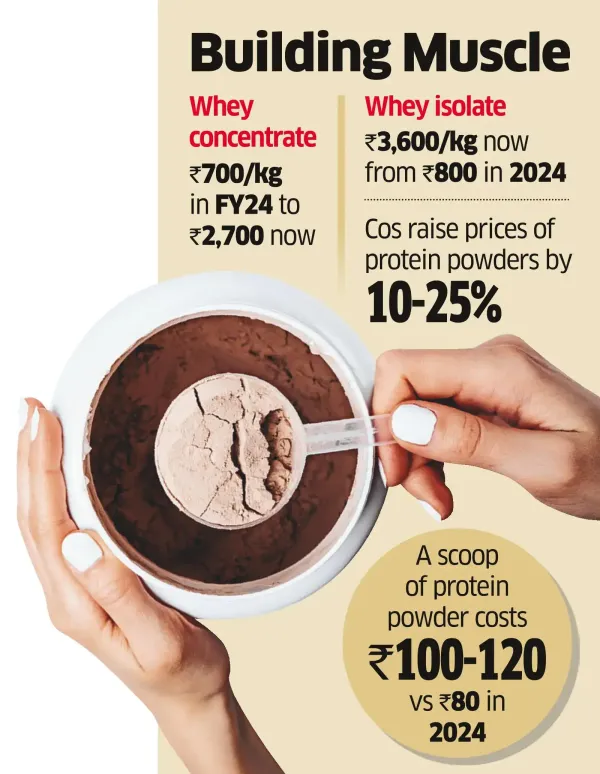 Companies such as The Whole Truth, Yoga Bar and Muscleblaze have increased prices of protein powders by 10-25% in the past few months to offset surging input costs. For some brands, the price hike is 40% compared with FY24.
"For protein powders, whey is more than 90% of cost of goods. We're raising prices, dropping marketing spends, cutting extraneous costs and absorbing a large part of impact so the consumer doesn't have to," The Whole Truth cofounder Shashank Mehta told ET.
A kilogram of whey powder that was earlier retailed for around ₹2,000 is now priced up to ₹3,500, while whey isolate costs around ₹4,500. A scoop of protein powder costs around ₹100-120 compared with ₹80 in 2024, and brands expect it to go further up to ₹140-150 in the coming months.
Nearly 90% of whey used by Indian brands is imported, mostly from Europe. Industry executives attribute the surge in price to a combination of geopolitical disruptions, global demand spikes and structural supply constraints. GLP-1 drugs, which are experiencing increasing popularity for weight management, are also a major contributor to demand.
"While awareness around protein has been rising across the globe, demand saw a sudden surge recently because of GLP-1 drugs, and doctors recommending high-protein diets to those taking these drugs," said Chirag Barjatya, founder of fitness coaching programme PFC Club.
Tejas Kulkarni, founder of whey protein startup TSA Tekk, said the price hikes for protein products barely covered the surge in input costs for companies. "But you can't burden consumers immediately in a market like India," he told ET. Brands say they are unable to fully pass on costs to Indian consumers because the category is nascent, growing and highly price sensitive. Industry executives say, margins have collapsed as brands try to protect market share.
"The input prices have gone up, but we have taken a conscious call not to punish consumers for what we believe could be a temporary commodity cycle. Our margins have taken some hit, but operational efficiencies and scale have helped offset part of the impact," Yoga Bar cofounder Suhasini Sampath told ET.
A by-product of cheese-making, whey has seen unprecedented price inflation over the last two to three years. According to industry estimates, whey concentrate, which averaged around ₹700 per kg in FY24, is now trading at ₹2,700. The more premium whey isolate has soared to as high as ₹3,600 per kg from ₹800 in 2024.
This comes when protein has begun entering everyday diets, and the country has seen a surge in companies selling not only whey protein powder, but everything from high-protein breakfast bars and smoothies to meal replacements, beverages and snacks.
"For protein powders, whey is more than 90% of cost of goods. We're raising prices, dropping marketing spends, cutting extraneous costs and absorbing a large part of impact so the consumer doesn't have to," The Whole Truth cofounder Shashank Mehta told ET.
A kilogram of whey powder that was earlier retailed for around ₹2,000 is now priced up to ₹3,500, while whey isolate costs around ₹4,500. A scoop of protein powder costs around ₹100-120 compared with ₹80 in 2024, and brands expect it to go further up to ₹140-150 in the coming months.
Nearly 90% of whey used by Indian brands is imported, mostly from Europe. Industry executives attribute the surge in price to a combination of geopolitical disruptions, global demand spikes and structural supply constraints. GLP-1 drugs, which are experiencing increasing popularity for weight management, are also a major contributor to demand.
"While awareness around protein has been rising across the globe, demand saw a sudden surge recently because of GLP-1 drugs, and doctors recommending high-protein diets to those taking these drugs," said Chirag Barjatya, founder of fitness coaching programme PFC Club.
Tejas Kulkarni, founder of whey protein startup TSA Tekk, said the price hikes for protein products barely covered the surge in input costs for companies. "But you can't burden consumers immediately in a market like India," he told ET. Brands say they are unable to fully pass on costs to Indian consumers because the category is nascent, growing and highly price sensitive. Industry executives say, margins have collapsed as brands try to protect market share.
"The input prices have gone up, but we have taken a conscious call not to punish consumers for what we believe could be a temporary commodity cycle. Our margins have taken some hit, but operational efficiencies and scale have helped offset part of the impact," Yoga Bar cofounder Suhasini Sampath told ET.