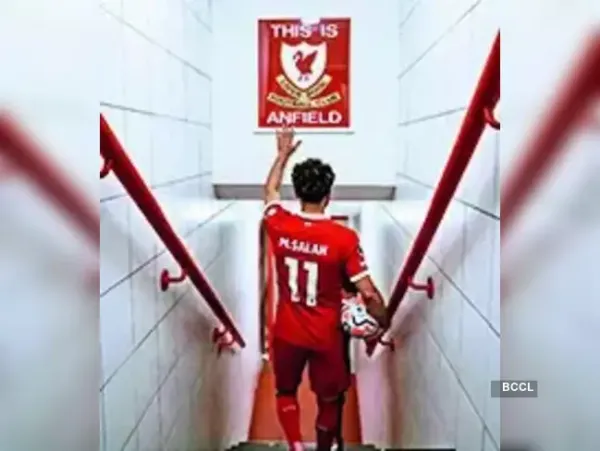
You don't have to be a Liverpool FC fan to know that Mohamed 'Mo' Salah's announcement this week, of leaving the club he has been warp and woof of since 2017 - 189 goals in 310 appearances - at the end of this season, marks the close of one of the most remarkable chapters in modern football. The 33-yr-old Egyptian's journey is not merely the tale of a fabulously gifted striker, but of a talent unearthed from a country that, despite Egypt's four World Cup appearances, has never been a footballing power. From the relative obscurity of Egyptian Premier League, Salah was plucked, polished and placed into the furnace of European competition - first in Basel, then Chelsea, and ultimately Liverpool, where he became the defining forward of Jurgen Klopp's Red Devils.
Salah's story is a rebuke to the lazy determinism of talent being monopolised by geography or tradition. Liverpool's decision to invest in Salah was not just a gamble on statistics displayed during his stint in Basel, and later in Roma, but a bet on potential, nurtured in the right tactical and cultural environment. The result: a player who redefined Liverpool's attack, delivered an EPL trophy in 2020 and 2025, and Champions League title in 2019, and made himself a striker for the ages. And, yet, one of the greatest wingers of all time has been unable to bring footballing glory to his country, Egypt.
The lesson extends beyond sport. In business, success hinges less on pedigree than on the ability to identify raw talent and hone it. Talent, spotted in the right person, let loose in the right conditions and system, breeds innovation, even genius. There is a reason why Indians thrive as global CEOs. Salah would not have been Mo if he had stayed behind a national 'centre line'.
Salah's story is a rebuke to the lazy determinism of talent being monopolised by geography or tradition. Liverpool's decision to invest in Salah was not just a gamble on statistics displayed during his stint in Basel, and later in Roma, but a bet on potential, nurtured in the right tactical and cultural environment. The result: a player who redefined Liverpool's attack, delivered an EPL trophy in 2020 and 2025, and Champions League title in 2019, and made himself a striker for the ages. And, yet, one of the greatest wingers of all time has been unable to bring footballing glory to his country, Egypt.
The lesson extends beyond sport. In business, success hinges less on pedigree than on the ability to identify raw talent and hone it. Talent, spotted in the right person, let loose in the right conditions and system, breeds innovation, even genius. There is a reason why Indians thrive as global CEOs. Salah would not have been Mo if he had stayed behind a national 'centre line'.