
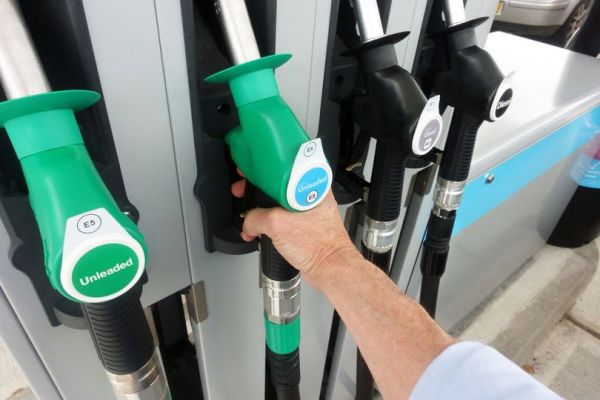
As the Middle East situation worsens, increasing numbers of people are becoming anxious about petrol prices. The region is a significant source of oil required for, among other things, fuel.
In reaction, some countries, such as Croatia and South Korea, have implemented price caps to assist consumers as the cost of a barrel of oil soars to $100 (£75) a barrel.
With the cost of living predicted to rise in response, particularly regarding mains gas prices, Britons are seeking ways to economise when driving.
- UK's most fuel-efficient motor named by experts - and it's not an Audi, BMW, or MINI
- Drivers urged to check 1 area of their car amid rising fuel costs
There are several strategies they can employ, including when they shift gears and which gear they opt to use. Some might be tempted to press certain buttons inside their car like the start-stop, but there are others they may wish to avoid.
Cruise control is utilised to maintain a car at a steady speed. You activate it by, you've guessed it, pressing a button inside your car, reports the Express.
On paper, it seems like a sensible idea, if a car maintains a constant speed rather than continually accelerating or decelerating, it should theoretically consume less fuel.
However, whilst this may be true in some situations, in others cruise control might work against the fuel economy-minded driver.
The RAC's automotive content editor Lawrence Allan stated that cruise control could work against you on roads that fluctuate in elevation.
He said: "This is because your cruise control would be slower to react to gradient changes, meaning when reaching the brow of a hill - at which point you would normally take your foot off the accelerator to maintain more of a constant speed when descending - your cruise control will keep the power on for a little longer as it's unable to see the gradient change in front of you. Driving in this way regularly would lead to worse fuel consumption."
Nevertheless, Lawrence confirmed that motorways remained the most fuel efficient roads, being typically flat and used by drivers for numerous journeys.
For those journeys, though, AA president Edmund King has urged motorists to consider carefully the kinds of trips they make in the coming weeks.
Mr King said: "Our suggestion is that drivers should not change their refuelling habits, but can consider cutting out some non-essential journeys and changing their driving style to conserve fuel."
Meanwhile, RAC head of policy Simon Williams stated: "We encourage drivers to continue filling up as normal, but to shop around for the best prices using apps like myRAC, as there can be big local differences between forecourts.
"Driving fuel efficiently by avoiding harsh accelerating and braking and ensuring tyres are inflated to the right pressures can help eke out every last mile and save money."
Contact to : xlf550402@gmail.com
Copyright © boyuanhulian 2020 - 2023. All Right Reserved.